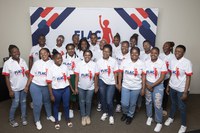
Voices of Accountability: FLAC Fellows Call for Action After the State of the Nation Address
Through statements of demand and open letters addressed to Cyril Ramaphosa, four FLAC Fellows Mihlali Mzimkulu, Nolwazi Ziqubu, Amogelang Tabane, and Glentia Phiri raise concerns that are both personal and national in scope. Their collective message is clear: young people are listening, they are engaged, and they are demanding measurable change.
Education Must Be at the Centre of National Development
For Mihlali Mzimkulu, one issue stands above all others education. She expresses deep concern that education was not emphasised as a central national priority, warning that such an omission risks undermining the country’s long-term development.
Her demands call for structural transformation, including:
- Increased investment in schools, infrastructure, and teacher training
- Expanded access to quality education in marginalized communities
- Stronger support for higher education, vocational training, and student funding
- The establishment of more universities in underserved regions
- Policies that ensure inclusivity, equity, and innovation across the education system
Her message is grounded in a simple but powerful principle: education is a right, not a privilege. Without prioritising it, social mobility, economic growth, and national progress remain at risk.
Youth Employment Requires Real Opportunities, Not Promises
Nolwazi Ziqubu’s letter reflects the lived experience of many young South Africans facing persistent unemployment despite qualifications and ambition. While she acknowledges commitments to support small and medium enterprises and youth entrepreneurship, she calls for practical implementation and accountability.
Her key concerns include:
- The need for clear, measurable youth job creation strategies with defined timelines
- The structural barrier created by entry-level jobs requiring prior experience
- The importance of fair and transparent access to higher education
- Safety risks faced by e-hailing drivers who depend on the sector for income
She emphasises that prolonged unemployment affects not only finances but also mental wellbeing contributing to stress, frustration, and a loss of hope. Her appeal is rooted in dignity: young people want to contribute meaningfully, but they need systems that enable participation rather than exclusion.
Demanding Transparency on National Systems and Infrastructure
Amogelang Tabane raises critical questions about governance, public investment, and technological reform. Her concerns focus on transparency, long-term planning, and the real impact of major national initiatives.
She seeks clarity on:
- The national strategy to end load shedding
- The effectiveness of military involvement in crime-fighting
- How R156 billion in water infrastructure funding will be allocated and monitored
- Whether SME funding is sufficient to significantly reduce unemployment
- How older citizens will benefit from a digital identification system
- Whether digital identification is necessary in a rapidly evolving technological environment
- Data security measures to prevent fraud and ensure safe information sharing
- The rollout and protection of digital identification systems
Her questions reflect a generation that expects detailed plans, not broad assurances and accountability for every major national investment.
Treating Unemployment and Violence as National Emergencies
Glentia calls for decisive and measurable responses to two interconnected crises: youth unemployment and violence affecting young people and women. She argues that if these challenges are recognised as national disasters, they must be addressed with the urgency and coordination such declarations demand.
Her statement of demand calls for:
- The establishment of a dedicated youth employment task team with quarterly public progress reports
- Employment pathways that recognise qualifications rather than requiring prior experience for entry-level roles
- A comprehensive national safety plan that actively protects young people and women from violence
Her message is direct: systemic crises require systemic responses structured, measurable, and sustained.
A Generation Demanding Accountability
Together, these FLAC Fellows represent a powerful cross-section of youth leadership committed to shaping a more equitable and responsive South Africa. Their demands span education, employment, safety, infrastructure, governance, and technological change but they share a common foundation: accountability and inclusion. Their voices remind us that national development is not defined by policy announcements alone, but by how effectively those policies transform everyday lives. Young people are not passive observers of governance they are active participants, advocates, and stakeholders in the country’s future. The call from these Fellows is clear:
South Africa’s progress depends on listening to its youth and acting on what they say.