Safety, Rights, Public Health, and Belonging in a Time of Global and Regional Change
In this context, inclusion is no longer discussed only as a human rights issue. It is increasingly contested within political discourse, media narratives, educational systems, healthcare spaces, and public institutions. LGBTQ+ rights are frequently politicised, while equality and inclusion are often framed as ideological rather than constitutional, civic, or public-interest concerns.
At the same time, legal protections do not always translate into lived safety or equal access to services. Across many communities, stigma, discrimination, violence, and social exclusion continue to shape everyday experiences, particularly for vulnerable and economically marginalised groups.
Globally, Pride now exists within a complex and contested landscape. While important advances have been made in equality protections and anti-discrimination frameworks, there has also been a visible increase in backlash against gender and sexuality-related rights discourse. Across different regions, this includes restrictions on inclusion programming, intensified misinformation campaigns, hostility toward civil society organisations, and growing pressure on institutions to soften or depoliticise rights-based language.
The Southern African region reflects both progress and ongoing structural challenges. Various countries maintain strong constitutional protections relating to equality and non-discrimination, while others continue to experience criminalisation, legal ambiguity, or inconsistent implementation of rights protections. Across the region, stigma often remains a more immediate barrier than legislation itself.
Access to healthcare, mental health support, justice systems, education, and social services remains uneven. Many LGBTQ+ individuals continue to navigate exclusion within families, schools, workplaces, faith communities, and public life. These realities are further shaped by broader regional pressures, including economic inequality, gender-based violence, HIV-related stigma, youth vulnerability, and strained public health and social protection systems.
For Soul City Institute, these issues are not only matters of identity or visibility. They are directly connected to public health, social well-being, equitable access to services, and democratic participation.
Inclusive societies are healthier societies. People are more likely to seek healthcare, access support services, participate in education, and engage in civic life when they feel safe, respected, and recognised within the systems designed to serve them. Exclusion and stigma, by contrast, deepen vulnerability, weaken trust in institutions, and undermine social cohesion.
This year’s Pride message is grounded in four interconnected principles:
- Protection — because safety shapes whether people can participate fully in society without fear or harm.
- Rights — because equality must be upheld not only in principle, but in institutions, policies, and lived experience.
- Language — because public discourse influences dignity, belonging, and whose humanity is recognised.
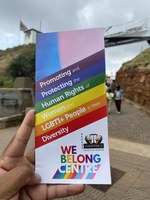
- Belonging — because participation, wellbeing, and social trust depend on whether people feel accepted within their communities and institutions.
As the Soul City Institute, we affirm that dignity should never depend on identity, geography, economic status, or belief systems. We affirm that inclusive health and social systems produce stronger outcomes for everyone, and that safety, fairness, and belonging are collective responsibilities.
Pride is not only about visibility. It is about protecting the conditions that make dignity, participation, health, and belonging possible.
At a time when inclusion, rights, and identity are increasingly contested globally and regionally, the need for fairness, evidence-based public dialogue, and human dignity becomes more urgent, not less.
For Soul City Institute, this remains part of a broader commitment to building societies in which all people are able to live safely, access services equally, participate fully, and belong without fear.