Freedom Day is often spoken about as a moment of arrival—a point in history where oppression was officially defeated and a new democratic era began. But lived experience tells a more complex truth. Freedom, for many people in our country, is still unfolding. It is still being fought for, still being defined, and still being denied in too many spaces.
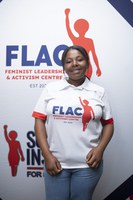
As Nomethe Mpembe, a FLAC Fellow, I reflect on Freedom Day not as the end of struggle, but as a continuing call to action. It is a reminder that liberation is not only about political milestones; it is about whether people can live safely, equally, and with dignity in their everyday lives.
Freedom is found in the voices that refuse silence. It is in the courage of women who speak out against gender-based violence, even when systems are slow to respond. It is in the young people who challenge harmful norms and demand better for their futures. It is in communities that come together to reject inequality and protect one another when institutions fail to do so.
Yet, these acts of courage also reveal the gaps in our freedom. Too many women still live with fear in their homes and communities. Too many children are exposed to violence, neglect, or poverty that limits their potential before they even have the chance to dream. Too many marginalised voices remain unheard in spaces where decisions about their lives are made without them.
This is why Freedom Day must mean more than celebration. It must also mean reflection and responsibility. It must challenge us to ask difficult questions: Who is still excluded from freedom? Whose safety is still not guaranteed? Whose dignity is still negotiable in practice, even if protected in law?
True freedom cannot exist in theory alone. It must be experienced in real, everyday ways. It must be felt in homes where people are safe, in workplaces where dignity is respected, in schools where every child has equal opportunity, and in communities where justice is not delayed or denied.
As we honour those who fought for liberation, we must also recognise that the struggle has evolved. Today, it includes fighting gender-based violence, addressing inequality, expanding access to justice, and ensuring that no one is left behind in the promise of democracy.
Freedom is not finished. It is lived or it is not real at all.
So on this Freedom Day, we are called not only to remember the past, but to recommit to the present. To build systems that protect, empower, and include. To amplify voices that have been silenced. To ensure that freedom is not just a national achievement, but a personal reality for every woman, child, and marginalised person in our society.
Because only when freedom is fully lived can we truly say it has been won.