ADVOCACY STATEMENT ON THE AFRICAN DRAFT CHARTER ON FAMILY, SOVEREIGNTY AND VALUES AND THE PROTECTION OF HUMAN RIGHTS IN AFRICA
As the Soul City Institute, we express deep concern regarding the emerging Draft African Charter on Family, Sovereignty, and Values, discussed at the recent African Inter-Parliamentary Conference held in Accra, Ghana.
While presented as a non-binding framework aimed at strengthening families and affirming cultural sovereignty, the charter raises serious concerns regarding its potential impact on established human-rights protections across Africa.
Africa already possesses a robust and internationally recognised human-rights architecture, including the African Charter on Human and Peoples’ Rights, the Protocol to the African Charter on the Rights of Women in Africa (Maputo Protocol), and the African Charter on the Rights and Welfare of the Child. These instruments affirm principles of equality, dignity, non-discrimination, bodily autonomy, and protection from violence.
Any parallel framework that risks narrowing or reinterpreting these protections must be approached with caution.
We are particularly concerned that interpretations of “family values” within such frameworks may be used to justify:
- Restrictions on sexual and reproductive health rights;
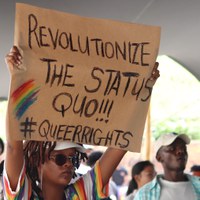
- Exclusion of LGBTQ+ persons from equal protection under the law;
- Limitations on bodily autonomy and gender equality;
- Weakening of protections for children as independent rights-holders; and
- Constraints on civil society, advocacy, and freedom of expression.
We reaffirm that the protection of families and the protection of human rights are not mutually exclusive. Strong families are built through dignity, equality, safety, and freedom not through exclusion or the restriction of rights.
We caution against the use of sovereignty discourse to justify human rights regression. Sovereignty does not override international and regional human-rights obligations voluntarily undertaken by African states.
We further express concern regarding proposals to host a follow-up conference in Cape Town in 2027. Any such platform must be carefully assessed against South Africa’s constitutional obligations and its longstanding commitment to human rights leadership on the continent.
We call on African governments, regional institutions, parliamentarians, and civil society to ensure that all policy frameworks reinforce, rather than undermine, existing human rights protections.
Human rights are not imported values. They are universal protections that safeguard all people, especially minorities and marginalised communities.
As Africa continues to define its future, we must ensure that this future is grounded in constitutionalism, equality, and dignity for all.